Pokémon card rarities explained
What the circle, diamond and stars at the bottom of a Pokémon card mean, how an Illustration Rare differs from a Special Illustration Rare, and what each rarity typically sells for, with live examples and prices from our catalog.
PokeTrail9 min read
After “what card is it?”, the next question is always “how rare is it?”. Rarity decides how often a card turns up in packs, what it looks like and, most of the time, what it’s worth. The catch is that the rarity system has changed several times in almost 30 years of the Pokémon TCG, and Japanese collectors, marketplaces and English-speaking players don’t always use the same names for the same cards.
This guide walks through every symbol, from the plain circle to three gold stars, with real cards from the PokeTrail catalog as examples. The examples and prices refresh every day along with the catalog.
Where to find the rarity on a card
The rarity symbol sits at the bottom of the card, right after the card number. On modern cards (Scarlet & Violet onwards) the line in the bottom-left corner reads something like G · SVI EN · 245/198 · ★★: G is the regulation mark used for tournament formats, SVI is the set code, 245/198 is the card number and the set size, and the stars at the end are the rarity. Here that’s two gold stars, a Special Illustration Rare: this is the Gardevoir ex from the first Scarlet & Violet set.
The number is a clue too. When the first figure is higher than the second (245/198), the card sits outside the set’s main list. Collectors call these secret rares, and every set page on PokeTrail counts them separately: “131 + 49 secret”.
The three basic symbols
These haven’t changed since the first set in 1999:
| Symbol | Rarity | What it means |
|---|---|---|
| ● | Common | The bulk of every pack |
| ◆ | Uncommon | Rarer, but still several per pack |
| ★ | Rare | Usually one per pack |
Most commons and uncommons are bulk: their median price in our catalog is a quarter or so. The exceptions are mostly the oldest sets, like the Base Set Pikachu.
Promo cards are their own thing. Instead of a rarity symbol they say PROMO, and their number has no set size (085 rather than 085/198) because they don’t belong to any booster set. They come from tournaments, collection boxes and special products.
Scarlet & Violet and Mega Evolution rarities (2023 onwards)
Scarlet & Violet brought in a new system in 2023: the colour and number of stars now tell you the rarity at a glance. Before that, every rare card had the same black star, and the only way to tell a plain holo from a full art was to look at it. In this system a regular Rare is always holo.
Double Rare: two black stars ★★
Pokémon ex in a regular frame. Players need them for decks, but they’re common enough to stay cheap: the median Double Rare in our catalog sells for less than the median plain Rare.
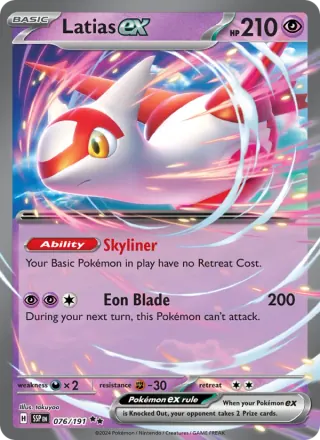 076/191
Latias ex
Surging Sparks076/191PokémonDouble RareArtist: takuyoa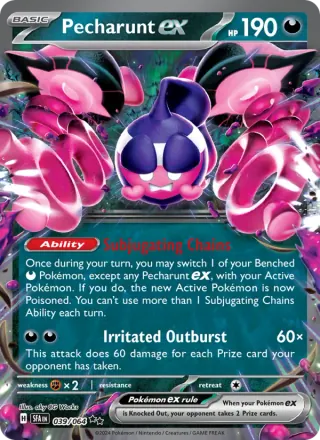 039/064
Pecharunt ex
Shrouded Fable039/064PokémonDouble RareArtist: aky CG Works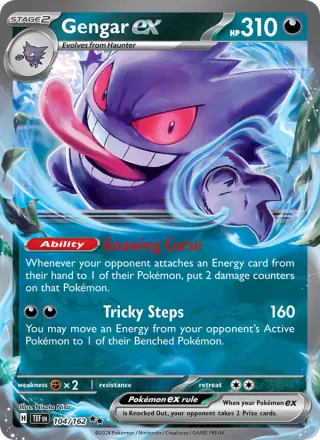 104/162
Gengar ex
Temporal Forces104/162PokémonDouble RareArtist: Nisota Niso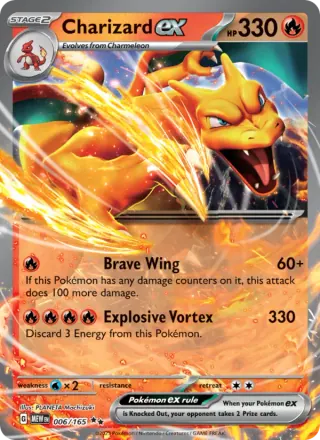 006/165
Charizard ex
151006/165PokémonDouble RareArtist: PLANETA Mochizuki
Ultra Rare: two silver stars
Full art cards: the artwork covers the whole card and the surface is textured. In Scarlet & Violet that means full art Pokémon ex and Supporters. Before 2023, Ultra Rare covered full art EX, GX and V cards as well, which is why the most expensive Ultra Rares are from the Sun & Moon era.
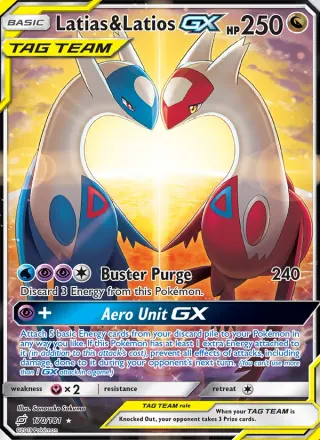 170/181
Latias & Latios GX
Team Up170/181PokémonUltra RareArtist: Sanosuke Sakuma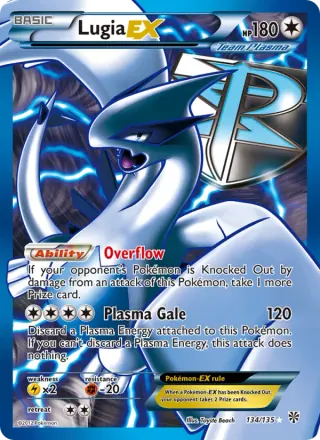 134/135
Lugia-EX
Plasma Storm134/135PokémonUltra RareArtist: Toyste Beach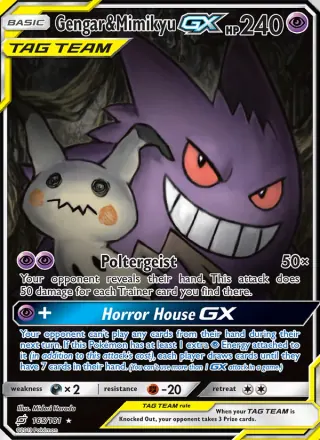 165/181
Gengar & Mimikyu GX
Team Up165/181PokémonUltra RareArtist: Midori Harada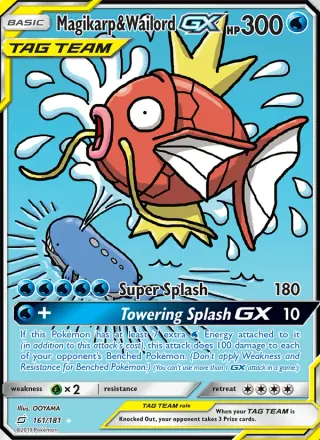 161/181
Magikarp & Wailord GX
Team Up161/181PokémonUltra RareArtist: OOYAMA
Illustration Rare: one gold star
A regular (non-ex) Pokémon in a full-card illustration, often a little scene of the Pokémon in its habitat. These are numbered above the set size. Plenty of people collect them by artist or by Pokémon, and they can surprise you: the Paldea Evolved Magikarp outsells most two-star cards.
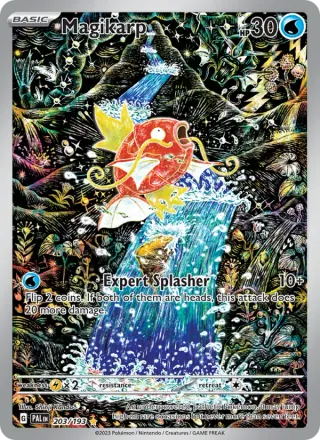 203/193
Magikarp
Paldea Evolved203/193PokémonIllustration RareArtist: Shinji Kanda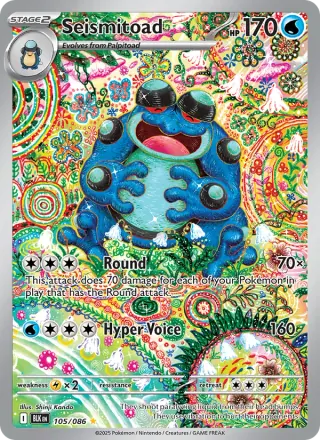 105/086
Seismitoad
Black Bolt105/086PokémonIllustration RareArtist: Shinji Kanda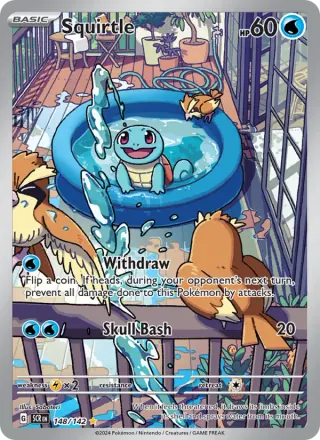 148/142
Squirtle
Stellar Crown148/142PokémonIllustration RareArtist: Saboteri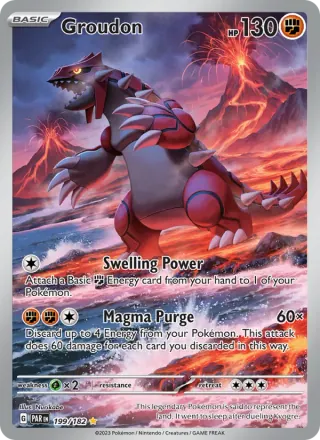 199/182
Groudon
Paradox Rift199/182PokémonIllustration RareArtist: Nurikabe
Special Illustration Rare: two gold stars
The same full-card art treatment for an ex or a Supporter. Usually shortened to SIR (or SAR, from Japanese). This is what most people opening modern packs are chasing, and nearly all the most expensive modern cards have this rarity.
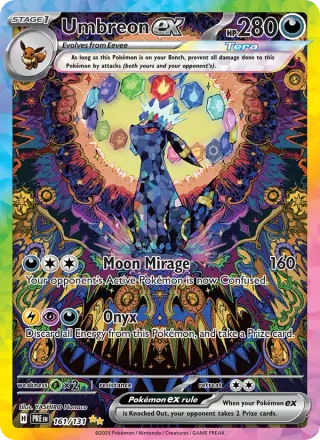 161/131
Umbreon ex
Prismatic Evolutions161/131PokémonSpecial Illustration RareArtist: YASHIRO Nanaco 232/091
Mew ex
Paldean Fates232/091PokémonSpecial Illustration RareArtist: USGMEN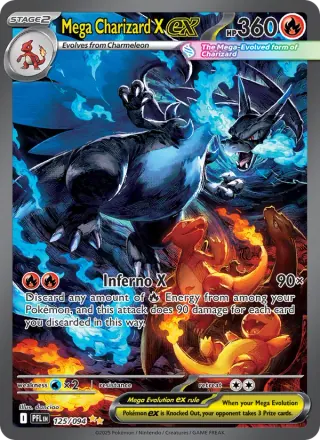 125/094
Mega Charizard X ex
Phantasmal Flames125/094PokémonSpecial Illustration RareArtist: danciao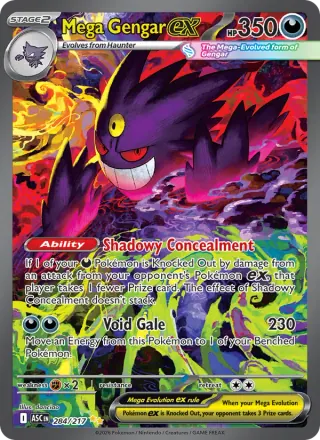 284/217
Mega Gengar ex
Ascended Heroes284/217PokémonSpecial Illustration RareArtist: danciao
Hyper Rare: three gold stars
Gold cards with an etched texture: Pokémon ex, Trainers, Items and Energy. On paper it’s the top rarity of Scarlet & Violet, but on price it often loses to SIRs: a single-colour gold card simply has less going on than a full illustration.
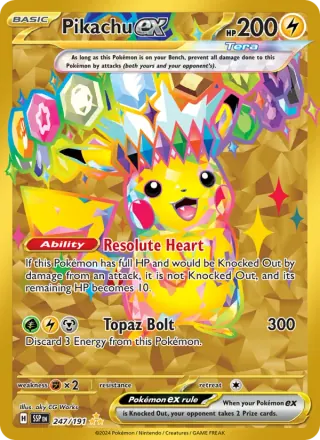 247/191
Pikachu ex
Surging Sparks247/191PokémonHyper RareArtist: aky CG Works 098/064
Basic Darkness Energy
Shrouded Fable098/064EnergyHyper Rare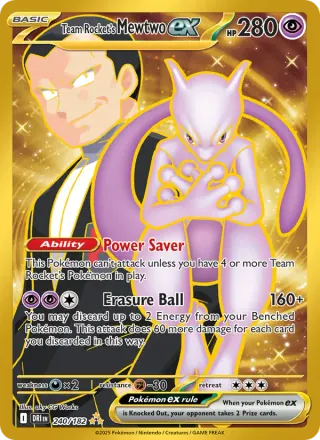 240/182
Team Rocket's Mewtwo ex
Destined Rivals240/182PokémonHyper RareArtist: aky CG Works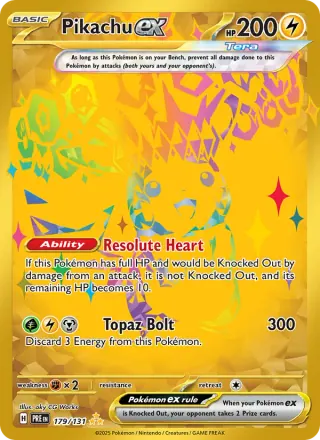 179/131
Pikachu ex
Prismatic Evolutions179/131PokémonHyper RareArtist: aky CG Works
ACE SPEC Rare, Shiny Rare and Mega Hyper Rare
- ACE SPEC Rare: cards with the ACE SPEC banner, powerful Items you can run only one of per deck. They came back in Temporal Forces (2024).
- Shiny Rare and Shiny Ultra Rare: shiny (alternate-colour) Pokémon from special sets such as Paldean Fates.
- Mega Hyper Rare: the top rarity of the Mega Evolution era (2025 onwards), reserved for Mega Pokémon ex.
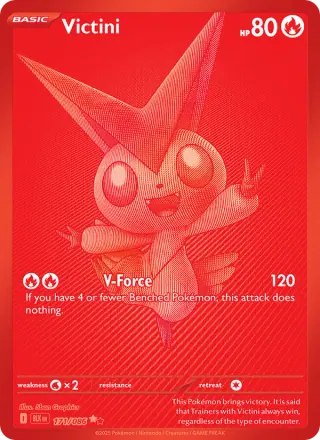
- Black White Rare: a rarity unique to Black Bolt and White Flare (2025).
 171/086
Victini
Black Bolt171/086PokémonBlack White RareArtist: 5ban Graphics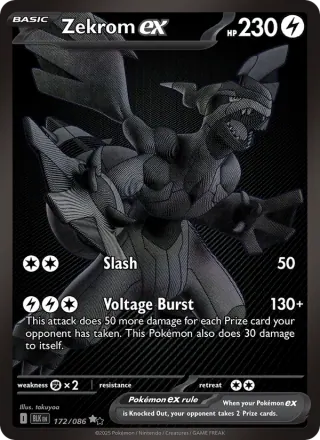 172/086
Zekrom ex
Black Bolt172/086PokémonBlack White RareArtist: takuyoa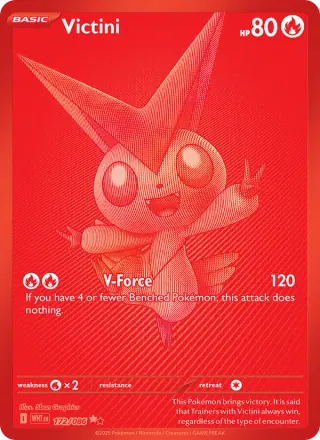 172/086
Victini
White Flare172/086PokémonBlack White RareArtist: 5ban Graphics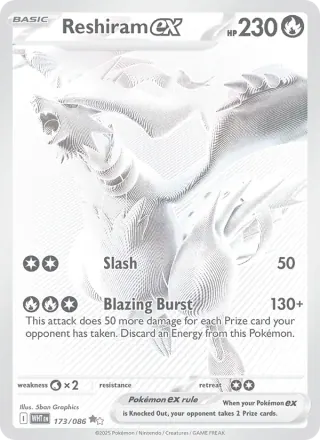 173/086
Reshiram ex
White Flare173/086PokémonBlack White RareArtist: 5ban Graphics
Before 2023: one star for every rare
Until Scarlet & Violet, a rare card of any tier carried the same black star ★. You told them apart by the way they looked and by their number:
- Holo Rare: a rare with holographic artwork (only the picture shines, not the whole card).
- Holo Rare V, VMAX, VSTAR: the Sword & Shield era (2020–2023) mechanics in a regular frame, roughly today’s Double Rare.
- Ultra Rare: full art EX, GX, V and Supporter cards.
- Secret Rare: numbered above the set size, mostly rainbow and gold cards.
- Alternate Art: the collectors’ name for full art V and VMAX cards with a story-style illustration instead of the usual art, mostly from 2021–2022 sets. They have no rarity of their own: our data lists the V alt arts as Ultra Rare and the VMAX ones as Secret Rare. The best known is the Evolving Skies Umbreon VMAX, “Moonbreon”, which is also the most expensive Secret Rare in our catalog.
- Trainer Gallery (numbered TG01…) and Galarian Gallery (GG01…): subsets of Pokémon pictured with their Trainers in the last Sword & Shield sets.
- Shiny Vault (numbered SV01…): the shiny cards of Hidden Fates and Shining Fates.
- Radiant Rare: one powerful shiny card per deck. Amazing Rare: a Pokémon on a rainbow background that spills over the frame.
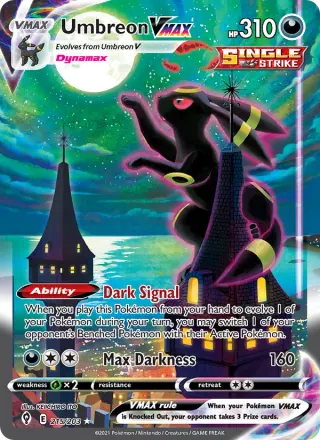 215/203
Umbreon VMAX
Evolving Skies215/203PokémonSecret RareArtist: KEIICHIRO ITO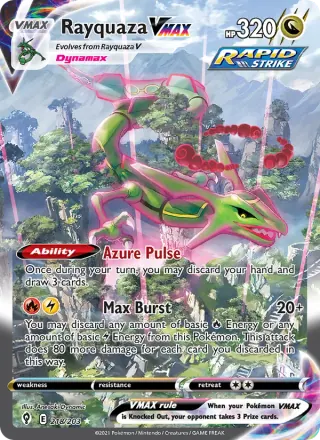 218/203
Rayquaza VMAX
Evolving Skies218/203PokémonSecret RareArtist: Anesaki Dynamic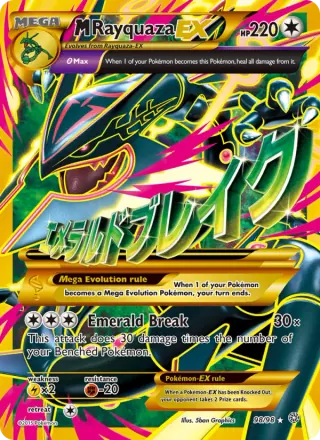 98/98
M Rayquaza EX
Ancient Origins98/98PokémonSecret RareArtist: 5ban Graphics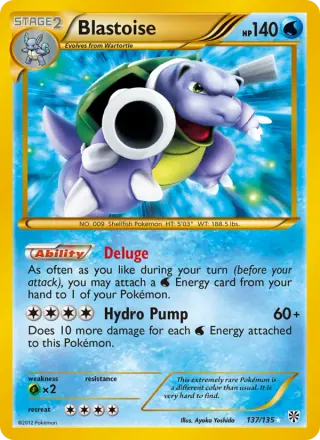 137/135
Blastoise
Plasma Storm137/135PokémonSecret RareArtist: Ayaka Yoshida
Rarities from earlier eras
Some rarities lasted only a few years. They have become classics, and they include some of the most expensive cards there are:
- Shining (Neo Revelation and Neo Destiny, 2001–2002; back in Shining Legends, 2017): the first shiny Pokémon cards.
- Gold Star ★ (2004–2007): shiny Pokémon with a star after the name, like Mudkip ★ or Espeon ★. Two or three per set, and very hard to pull. They’re among the most valuable cards of their era.
- LV.X (Diamond & Pearl and Platinum, 2007–2009): a card placed on top of the regular version of the same Pokémon.
- Prime and LEGEND (HeartGold & SoulSilver, 2010). A LEGEND is two cards played side by side to form one picture.
- BREAK (XY, 2015–2016): a sideways card with a gold border.
- Prism Star ◇ (Sun & Moon, 2018–2019): only one copy per deck.
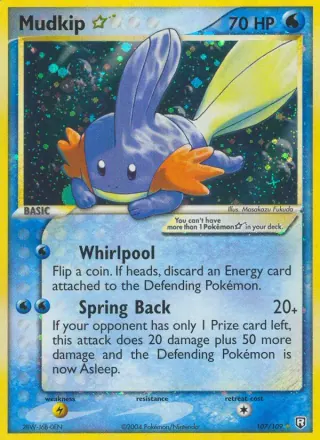 107/109
Mudkip ☆
Team Rocket Returns107/109PokémonRare Holo StarArtist: Masakazu Fukuda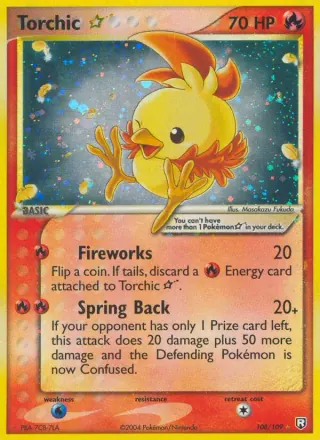 108/109
Torchic ☆
Team Rocket Returns108/109PokémonRare Holo StarArtist: Masakazu Fukuda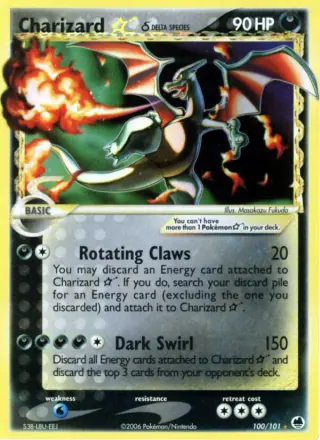 100/101
Charizard ☆ δ
Dragon Frontiers100/101PokémonRare Holo StarArtist: Masakazu Fukuda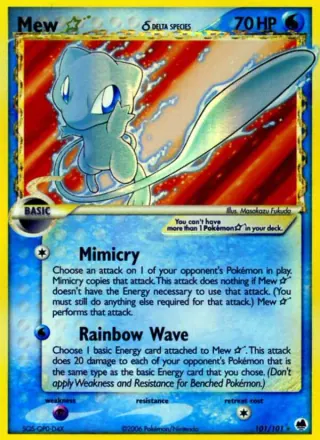 101/101
Mew ☆ δ
Dragon Frontiers101/101PokémonRare Holo StarArtist: Masakazu Fukuda
Shining, LV.X, LEGEND and Prime:
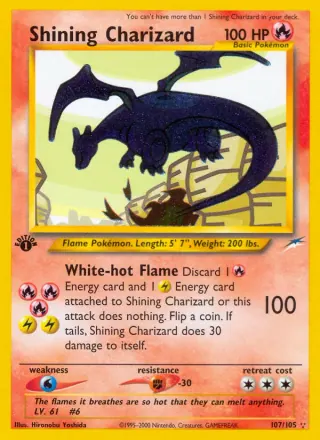 107/105
Shining Charizard
Neo Destiny107/105PokémonRare ShiningArtist: Hironobu Yoshida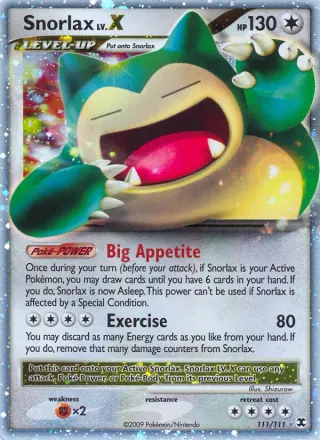 111/111
Snorlax LV.X
Rising Rivals111/111PokémonRare Holo LV.XArtist: Shizurow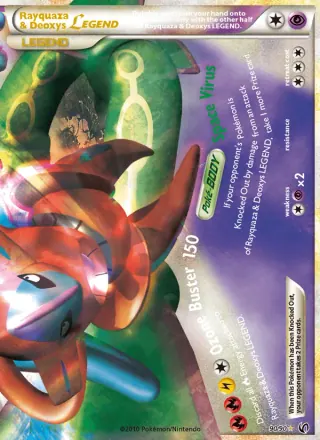 90/90
Rayquaza & Deoxys LEGEND
Undaunted90/90PokémonLEGENDArtist: Shinji Higuchi + Sachiko Eba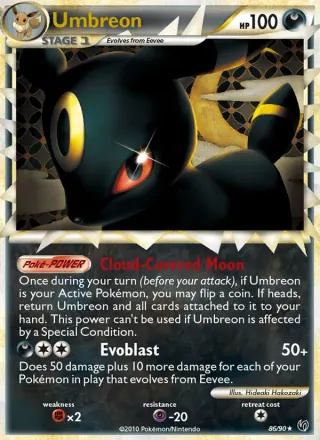 86/90
Umbreon
Undaunted86/90PokémonRare PrimeArtist: Hideaki Hakozaki
What isn’t a rarity
A few marks are easy to mistake for rarity, but they’re print variants of the same card:
- Reverse holo: everything shines except the artwork. Commons, uncommons and rares all come in reverse holo, and the rarity stays the same. It usually costs a little more than the regular print.
- 1st Edition: the “Edition 1” stamp to the left under the artwork on the first print runs of 1999–2002. These cost many times more, but the rarity symbol is the same.
- Promo stamps: a tournament, prerelease or store logo printed on a regular card.
The PokeTrail collection tracks these separately: each card has a “+” for every print, so a Base Set Charizard and its 1st Edition are two entries.
Japanese abbreviations
A lot of prices and news come from the Japanese market, where the same rarities go by different names. The ones that trip people up:
| Japanese | English | Watch out |
|---|---|---|
| RR | Double Rare | — |
| AR (Art Rare) | Illustration Rare | — |
| SAR (Special Art Rare) | Special Illustration Rare | — |
| SR (Super Rare) | Ultra Rare | For older English sets, SR usually means Secret Rare |
| UR (Ultra Rare) | Hyper Rare | A Japanese UR is a gold card, not an English Ultra Rare |
PokeTrail’s search understands these shorthands: “sir”, “sar”, “ir”, “ar”, “rr” and “hr” in the search box find cards of that rarity. “umbreon sir”, for example, finds the Prismatic Evolutions Umbreon ex.
Does a higher rarity mean a higher price?
Broadly, yes, with exceptions. By median price in our catalog, SIRs beat Hyper Rares even though Hyper Rares have more stars. Double Rares sell for less than plain Rares on average. And the most expensive cards of older eras, Gold Stars and Shinings, carry the same black star ★ as a plain Rare: there was no symbol of their own, only the card itself tells you.
Rarity sets the ceiling within a single set. Across sets, other things matter more: which Pokémon is on the card (Charizard, Pikachu, Umbreon and the other Eeveelutions nearly always cost more), how many packs of the set were printed, how popular the artist is, and the card’s condition.
Below are the rarities in the PokeTrail catalog, from the most common to the rarest (leaving out those with just a few cards): how many cards it has, the median price, the years it appears in, and its most expensive card. Click a rarity to see all its cards in the catalog, most valuable first.
In short
- ● Common, ◆ Uncommon and ★ Rare are the three basic symbols, unchanged since 1999.
- Since 2023 the colour and number of stars give the rarity: black for regular cards, silver for full art, gold for illustrations and gold cards.
- A number above the set size (245/198) means a secret rare.
- Reverse holo, 1st Edition and promo stamps are print variants, not rarities.
- A high rarity doesn’t guarantee a high price: look at the Pokémon, the set and the condition.
Filter every card by rarity in the card catalog. To see which rares of a set you’re still missing, add your cards to your collection.